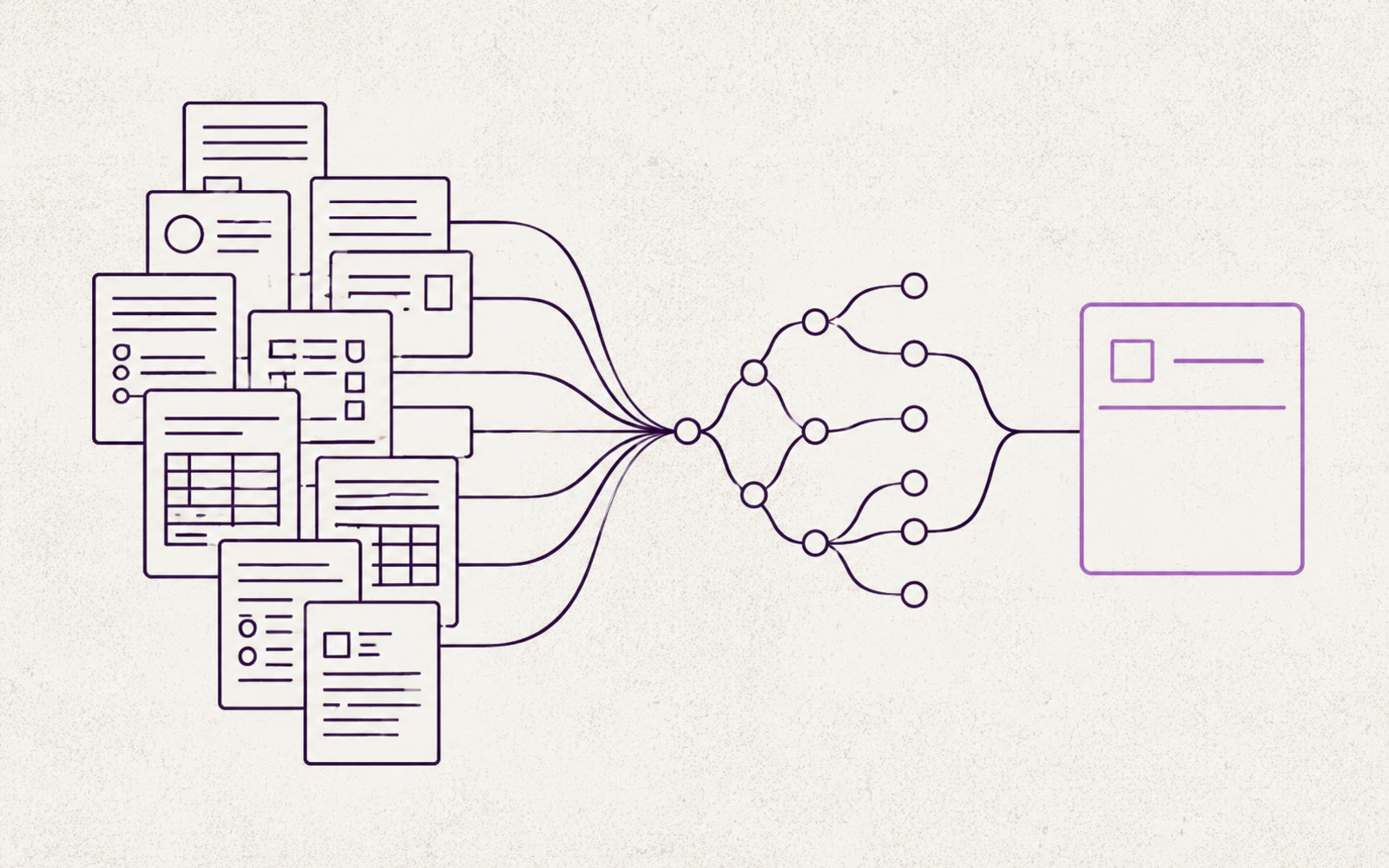
Yes. Lawyers can become software engineers, and AI coding tools make it easier to start. A lawyer can describe a workflow in plain English, generate a prototype and test it with the people who will use it. The bigger opportunity is in product development. Lawyers can use their knowledge of legal work to decide what to build, what the software should do when a case falls outside the usual rules, and how to tell whether it helps.
How AI made software development more accessible
Programming languages have become easier to read and write. In 1957, FORTRAN let scientists express calculations in a higher-level language that a compiler translated into machine instructions. COBOL made readability a design goal for business software. Large language models (LLMs) take another step in that direction. You can give a coding assistant a description, sample inputs and expected results. The model interprets what you mean and fills in gaps, sometimes in ways you never intended.
Across three randomised field experiments involving 4,867 developers, a 2026 Management Science study estimated that access to an AI coding assistant increased completed tasks by 26%, with larger gains among less experienced developers. In a different setting, METR found that experienced open-source developers using early-2025 tools took 19% longer on tasks in familiar repositories. Its follow-up suggested more recent tools might be faster, but the researchers could draw only weak conclusions about the size of the gain.
Why legal experience helps you build better software
In his 1987 essay No Silver Bullet, computer scientist Fred Brooks argued that the hardest work in software is specifying, designing and testing how a system should behave. Lawyers do related work when they define terms, anticipate exceptions and work out which rule takes precedence. Those habits translate directly into software requirements that can be tested. An instruction like “check that the bundle is complete” gets more useful when it names a required document, explains when the requirement applies and says what the tool should display if it cannot find it.
What does an AI-first software engineer do?
An AI-first software engineer uses AI throughout development, from sketching a prototype to drafting tests and investigating failures. As it gets easier to try ideas, the engineer can spend more time with users, compare different designs and decide which problems are worth solving. They still own the decisions about how the software works, how it is tested and what happens after launch.
Take a filing-readiness checker. Watch a paralegal assemble a court bundle and find out where rework happens. If pagination keeps causing rework, start there. Ordinary code can flag index entries pointing beyond the PDF’s last page. A model could help identify a document mentioned in an order, showing the passage it relied on and passing uncertain matches to a person. In a pilot, measure how many defects the tool catches, how often it raises false alarms and whether it saves staff time. DORA’s 2025 research found a link between focusing on users and getting more value from AI adoption.
What are the risks of AI-assisted coding for lawyers?
- Insecure code. In a 2023 study presented at the ACM Conference on Computer and Communications Security, participants using an AI coding assistant on security tasks wrote less secure code and were more likely to believe it was secure. For the filing checker, test that changing a document ID in a link cannot expose a file from another matter.
- Client confidentiality. The Solicitors Regulation Authority for England and Wales has warned about confidential client information being entered into public AI tools. Prototype with fictional documents. Before using live data, check what the assistant can access and what its provider stores or uses for training.
- Convincing errors. Researchers found that even specialist legal research tools produced hallucinations. If your product uses a model, give users a way to inspect the underlying source and send uncertain outputs for human review.
Do lawyers still need to learn to code?
Yes. You need to read and debug generated code, work with databases, use version control and write tests that check your assumptions. Start with a familiar workflow. Give the assistant examples of correct and incorrect behaviour, review its changes in small batches and run your tests whenever you change a rule. For example, a bundle with a missing order should produce the same warning after you add a pagination check. Ask an experienced engineer to review anything that will handle live client data.
The test comes after launch. Can you explain why the tool missed a defect, fix it without breaking another check and decide which improvement matters most to users? Those are engineering and product decisions. AI brings the first prototype within reach. Legal experience gives you a head start on deciding what it should do.
Related reading · Why training matters for AI adoption in law firms